
Late Payment Fee: Meaning, Calculation, and When to Use It

What a late payment fee is
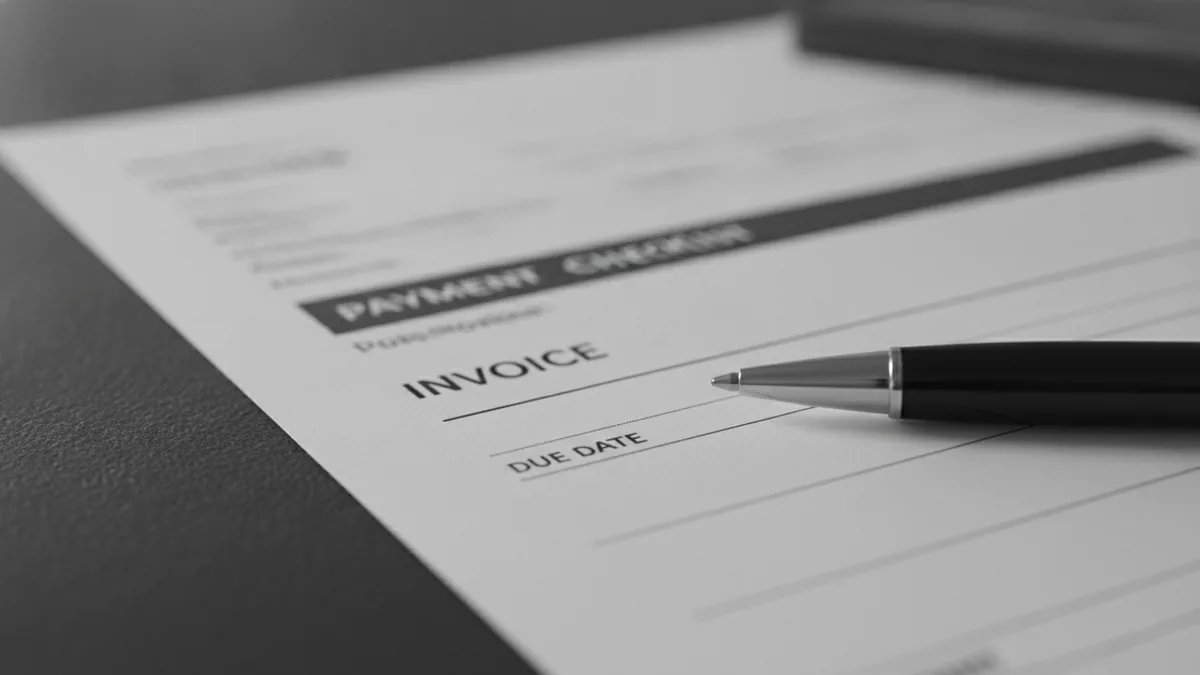
A late payment fee is a penalty charged when an invoice or bill payment is not made by the agreed due date. In plain terms, it is the price of paying late, as defined in your payment terms or contract. The fee supports cash flow management by compensating for delays and helps fund the administrative work of chasing overdue payments.
For customers, a late payment fee is a clear signal that the payment is behind schedule. It also acts as a risk-management tool, since predictable penalties encourage timely follow-through. Many businesses use a grace period, which gives customers a short window to pay before any penalty triggers.
Even when penalties are permitted, they should not feel like a surprise. Clear policies protect both client relationships and your invoice process. If customers understand the rules, fewer disputes end up in your accounts receivable queue.
- Definition of late payment fee: a contract-based penalty for overdue payments.
- Late payment fee meaning: a financial consequence tied to the due date.
- Purpose: incentive for timely payment and support for admin costs.
How late payment fees work in practice
Late payment fees usually follow a simple cycle. First, the invoice is issued with a due date and payment terms. Then, once the due date passes and any grace period ends, the business applies the fee according to the agreed method. If the customer pays after that point, the fee may be added to the amount due or billed as a separate line item.
The key is that the fee must be grounded in the terms the customer agreed to. That agreement can be in a contract, in invoicing terms, or in a standing policy that the customer accepts. Without that baseline, customers may treat the fee as unfair, which can lead to chargebacks, payment disputes, or payment refusal.
Some fees are charged once, while others accrue over time. Common approaches include a fixed fee per month late or a recurring percentage of the overdue balance. Before you change your process, confirm that your invoicing system can apply the fee consistently across invoices and customers.
| Fee structure | What it means | Where it fits |
|---|---|---|
| Fixed amount | A set dollar amount once late | Small invoices, simple policies |
| Percentage of invoice | A percent applied to the overdue balance | Ongoing balances, proportional fees |
| Fixed + percentage | A base fee plus a percent of overdue | Higher admin costs, larger invoices |

Calculating late payment fees (with a late payment fee example)
When you calculate late payment fees, you start with the overdue amount and the method you agreed to in your payment terms. A common setup is a standard late fee of about 1% to 2% of the overdue amount for a late period. Some regions and industries place caps, so the “standard late payment fee” rate can be lower in practice.
Here is a practical late payment fee example. Suppose an invoice totals $10,000 with net-30 terms. The customer pays 10 days late, your policy charges 1.5% per late period, and you apply the fee to the overdue balance. The calculation becomes $10,000 × 1.5% = $150 as the late payment fee.
If your policy uses a fixed fee plus a percent, the steps are slightly different. You might charge a $25 fixed amount once the grace period ends. Then you add a 1% monthly fee based on the overdue balance. That keeps the penalty visible even on smaller invoices, while still scaling with the money delayed.
- Identify the overdue balance: invoice total minus any payments made before the penalty start.
- Confirm the trigger: due date plus any grace period.
- Apply the fee formula: fixed amount, percent, or both.
- Cap if required: check state and contract limits before finalizing.
- Record it: add the fee consistently in your invoice management tool.
For teams learning how to charge late payment fees, the most common implementation mistake is applying the percent to the full invoice even after partial payment. Another mistake is changing the policy midstream without notice. Use a single source of truth for the terms, then apply them in the same way every time.

When to charge late fees and when to pause
You generally charge late fees only after the due date passes and your grace period, if any, ends. Your policy should name the trigger clearly, such as “fees apply starting on day 31 after invoice date.” That avoids disputes over whether the fee is based on invoice date, service date, or receipt date.
It is also smart to pause when a delay is caused by your side. If you misapplied a payment or sent the invoice to the wrong payment address, a late fee will usually backfire. Customers remember fairness, and disputes harm payment timelines more than small fees ever help.
Another “when to pause” scenario is payment friction. For example, a customer may have tried to pay on time, but a payment method failed or the processor rejected it. In that case, you can treat the fee as conditional on proof of attempted payment. This can reduce friction without removing the incentive to pay promptly.
- Charge after: due date + grace period ends.
- Don’t charge for: your billing errors or misposted payments.
- Consider conditional waivers: if the customer attempted payment on time.
- Document decisions: keep an audit trail in accounts receivable.
For some customers, the impact can be bigger than you expect. A mortgage declined due to late payment is an example of how one missed payment can cascade into wider credit issues. While your invoices are not a mortgage, the lived effect of late payments can still be real for your customers.
Alternatives to late payment penalties
Late fee penalties are not the only way to protect cash flow management. Some businesses use reminders, stronger payment term choices, or incentives for early payment. Others treat penalties as a last resort after repeated outreach.
One option is to adjust payment terms. Moving from net-60 to net-30 can reduce how long funds sit in collections. You can also require partial upfront payment for larger work, which reduces your administrative costs and collection risk. Another option is a more structured payment plan for long-term clients.
If you want to avoid traditional penalties, you can offer early pay discounts. A small “pay within 10 days” discount can be cheaper than the effort of chasing overdue amounts. Just be consistent, and make sure the discount logic matches how you invoice.
| Approach | What it does | Trade-off |
|---|---|---|
| Payment reminders | Reduces misses through nudges | Needs good invoice management |
| Early pay discount | Pulls cash in earlier | Lower revenue per invoice |
| Installment plan | Spreads risk for the customer | More tracking work |
| Administrative fees | Costs tied to processing delays | Must be clearly explained |
Be careful with similarly named charges. For instance, a returned payment fee meaning is tied to a failed payment instrument, not a missed due date. A payment convenience fee is also different. It is typically linked to the method of paying, not overdue status.
State regulations and limits you should expect
Late payment fees can be regulated by state law. Some states limit the maximum amount a business can charge, and they may treat the fee like an interest charge or a penalty subject to caps. Other rules may specify how late fees must be disclosed in contracts and whether they must relate to actual costs.
Because the rules vary, the safest approach is to review your state’s requirements and align your invoicing policy with them. If you operate across multiple states, you may need a tiered policy based on the customer’s address or the contract’s governing law. Your goal is simple: keep the fee enforceable and predictable.
Also check how the court system treats late fees in your context. Some fees are easier to defend when they are modest, clearly disclosed, and applied consistently. A high late rent payment fee or an overly complex fee schedule can raise the odds of a customer dispute.
- Expect: disclosure requirements and maximum caps in some states.
- Check: whether the fee is treated like interest or a penalty.
- Plan: for multi-state customers if you serve many regions.
- Document: the agreed payment terms for each customer.
If you publish your fee policy online, confirm it matches what customers accepted on signup or in the contract. Aligning policy text and invoicing behavior avoids “invoice late payment fee wording” disputes.
Best practices for communicating late fees clearly
Good communication is not just courtesy. It is the practical step that reduces disputes and protects renewal conversations. Start with invoice late payment fee wording that is plain, short, and specific about when the fee starts. Include the method used to calculate the penalty, plus any grace period.
Next, place the information where customers will actually see it. Put the fee terms near the due date on invoices, in your payment terms page, and in your contract template. If you use an automated invoice workflow, test that the fee text displays correctly and triggers only under the correct conditions.
Finally, make it easy to resolve issues. If a customer asks about a fee, show the math and the source of the trigger date. That transparency builds trust and improves payment speed.
- State the trigger: due date and grace period in plain language.
- State the method: fixed fee, percent, or both.
- State the cap: if law or contracts limit the amount.
- Show an example: a single late payment fee example on request.
- Keep records: audit logs for when the fee was applied.
When customers understand the rules, you get faster payments and fewer hard feelings. That is better for cash flow management than adding fees blindly, invoice after invoice.
Frequently asked questions
What is a late payment fee?
A late payment fee is a penalty charged when a payment is not made by the agreed due date. The fee is usually included in payment terms or a contract.
How do businesses calculate late payment fees?
They calculate the fee based on the overdue amount and the agreed method, such as a fixed fee or a percentage. Many policies apply the fee only after any grace period ends.
What is a standard late payment fee rate?
Many businesses use a rate in the range of about 1% to 2% of the overdue amount for a late period. Your exact rate may vary by region and industry rules.
When can a landlord charge a late rent payment fee?
A landlord can usually charge rent late fees only if the lease or rental agreement allows it and any notice and grace period rules are followed. State law may cap the maximum amount.
What is the difference between a late payment fee and a returned payment fee?
A late payment fee is for missing the due date. A returned payment fee meaning typically refers to a payment that failed or was reversed, even if the original attempt was timely.
How should businesses communicate late fee policies to customers?
Use clear invoice late payment fee wording that states when the fee starts and how it is calculated. Show the math when customers ask to reduce disputes.
Related Articles

Return Payment Fees — Why They Happen and How to Avoid Them
See why payments are returned, what fees may follow, and how to reduce the risk.

2D Payment Gateways — Speed, Risk, and Setup
See how 2D payment gateways work, where they help, and what risks they bring.

ACH Payments — How Bank Transfers Work
Understand ACH transfers, costs, timing, transaction types, and business use.